
MIG servers October 06, 2026
NVIDIA is fundamentally changing native GPU programming by bringing Rust directly to GPU kernels, setting a new standard for AI systems development. By compiling Rust natively to PTX, developers can now eliminate complex memory leaks, data races, and runtime crashes entirely at compile time. This shift introduces two primary development tracks—the granular SIMT model (cuda-oxide) and the compiler-optimized Tile abstraction (cutile-rs)—giving engineers unprecedented memory safety without sacrificing bare-metal performance.
However, transitioning to this memory-safe ecosystem introduces new infrastructure bottlenecks. Heavy compilation pipelines and bleeding-edge toolchains require massive CPU resources, stable OS-level configurations, and completely isolated environments. In this guide, we break down how these two CUDA Rust tracks work, how strict borrowing rules prevent GPU crashes, and why properly compiling and benchmarking these next-generation workloads strictly demands the unthrottled power and root access of bare-metal dedicated GPU servers.
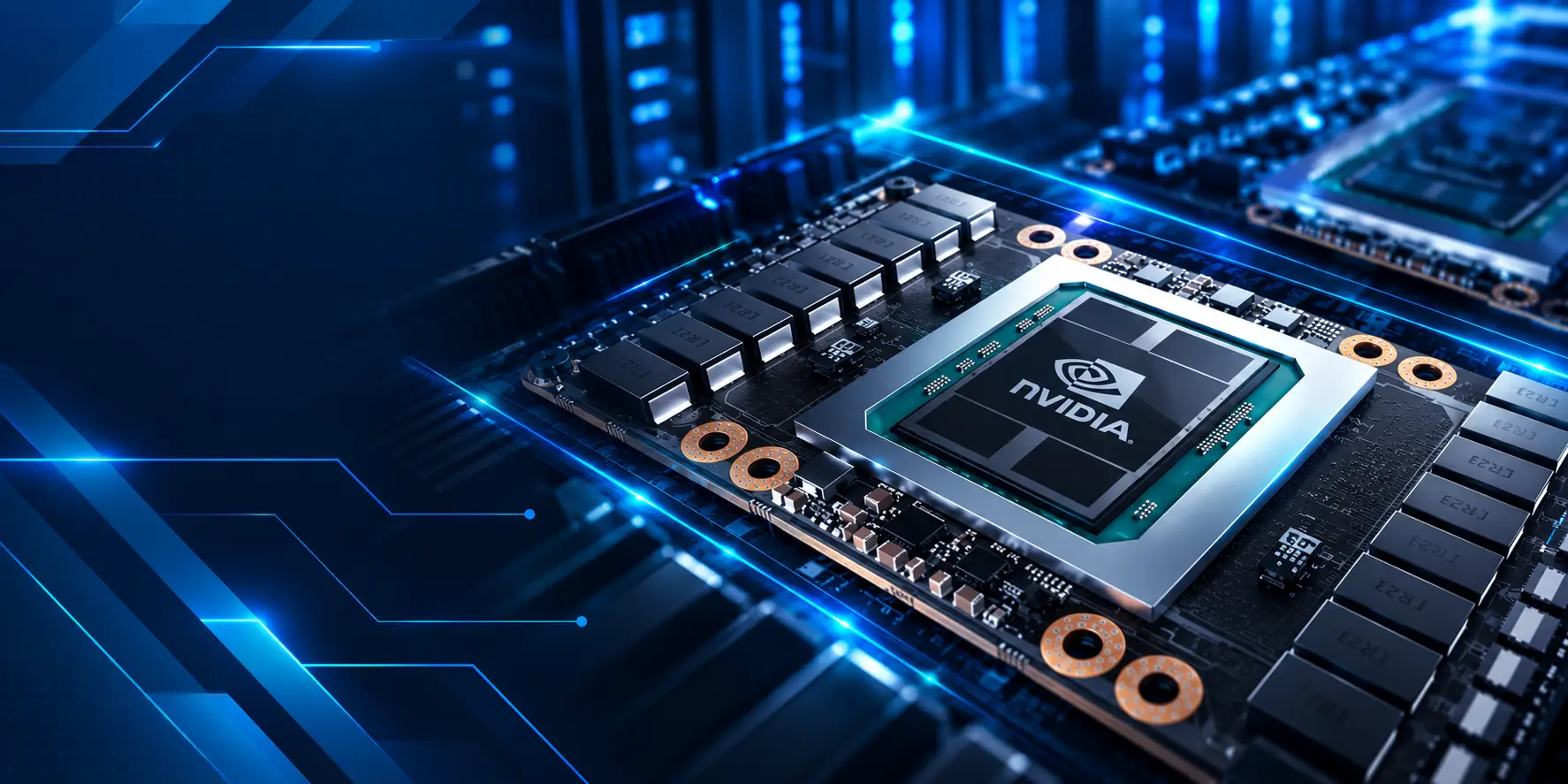
The Shift to Native Rust for GPU Kernels
In September 2026, NVIDIA announced a major shift in native GPU programming: the introduction of CUDA Rust. For years, writing GPU kernels meant relying exclusively on CUDA C++ or CUDA Python. However, the systems layer of AI—spanning inference engines, serving infrastructure, and drivers—is rapidly changing, and Rust is becoming the industry standard.
The reason is simple. Rust catches entire classes of concurrency and memory bugs at compile time without giving up bare-metal performance. NVIDIA is already driving this shift; the Nova Linux driver is written in Rust, and NVTX has Rust bindings.
Until recently, the GPU kernel itself was the exception. You could launch kernels from Rust, but the kernel code had to be written in another language. NVIDIA CUDA Rust finally closes that gap. Developers can now write GPU kernels directly in Rust and compile them natively to PTX (Parallel Thread Execution), rather than wrapping code from somewhere else.
However, because this technology is still in early alpha and requires heavy compilation power, testing it on a standard laptop or a shared VPS is a bottleneck. To compile complex Rust code and run early-stage kernels without crashing, developers need the isolated, high-performance environment of a bare-metal dedicated GPU server.
Two Approaches to CUDA Rust: SIMT vs. Tile
NVIDIA provides two distinct programming tracks for writing GPU kernels in Rust, matching the existing models in CUDA. The choice depends on how much manual control you need over the hardware versus letting the compiler optimize the execution architecture.
1. The SIMT Track (cuda-oxide)
SIMT (Single Instruction, Multiple Threads) is the traditional GPU programming model familiar to developers who write in CUDA C++ or numba-cuda. In this track, you write code dictating exactly what a single thread does, and the GPU launches thousands of them in parallel.
NVIDIA implements this through cuda-oxide, a custom rustc codegen backend. It intercepts compilation, routing functions through Rust MIR, the Pliron IR framework, and LLVM IR, ultimately translating them into PTX.
Key characteristics of the SIMT track:
- Granular Hardware Control: You manage thread indexing and memory allocation directly.
-
Memory Safety Mechanism: Because standard Rust
prevents multiple threads from holding a mutable reference
(
&mut) to the same array,cuda-oxideintroducesDisjointSlice. This custom type splits a single mutable borrow into per-thread pieces, granting each thread exclusive access to its own element. - System Requirements: This is a low-level approach requiring Linux, a GPU with Compute Capability 8.0+, the CUDA 12.x toolkit, and a pinned nightly Rust toolchain.
2. The Tile Track (cutile-rs)
The Tile model represents a newer, higher-level abstraction. Instead of dealing with individual scalar values and manual thread counts, you perform computations on tiles (sub-tensors) of data.
Powered by the cutile-rs crate, each tile block runs the
kernel body as a single logical thread. The
#[cutile::module] macro embeds the kernel's AST into the
host binary, which is then JIT-compiled through CUDA Tile IR exactly
when it is launched.
Key characteristics of the Tile track:
- Compiler Optimization: The Tile IR compiler decides how your tiles map onto the physical GPU architecture, meaning your source code isn't locked into architecture-specific choices.
-
Simplified Safety Constraints: There is no need
for
DisjointSlice. The Tile track uses a.partition()method on the host side. This automatically partitions data chunks, assigning exclusive ownership to each tile block, which satisfies Rust's strict&mutborrowing rules by default. - Lighter Requirements: Unlike SIMT, the Tile track works on stable Rust (1.89 or newer). It requires CUDA 13.3 and Compute Capability 8.0+, but eliminates the need for nightly toolchains and custom LLVM setups.
SIMT vs. Tile: Which CUDA Rust Model Should You Choose?
When starting a new project, NVIDIA’s guidance is straightforward: reach for the Tile track first.
Because the Tile IR compiler automatically decides how to map tiles onto the underlying GPU architecture, your source code remains clean and hardware-agnostic. You only need to drop down to the SIMT track when your specific workload demands manual thread indexing, hyper-specific control over the execution grid, or custom shared memory management.
Ultimately, the choice doesn't lock you in. NVIDIA plans to support inter-language interoperability, allowing you to use the CUDA exposure that best fits your existing stack.
The Real Advantage: Compile-Time Memory Safety
Regardless of whether you choose SIMT or Tile, the biggest advantage of writing GPU kernels in Rust is what happens before the code ever hits the hardware.
In traditional C++, having thousands of parallel threads accessing the same memory buffers in no guaranteed order is a recipe for disaster. If two threads hit the same address and one is writing, the execution order dictates the result. These types of data races and aliasing bugs rarely reproduce on demand—they often pass unit tests only to fail catastrophically in production.
Rust fixes this by construction. Both cuda-oxide and
cutile-rs enforce strict borrowing rules at compile time:
inputs can be shared (&), but an output buffer
(&mut) must belong exclusively to a single writer.
If a developer accidentally passes an output buffer as one of its own
inputs, the Rust compiler immediately intervenes, halting the build with a
borrowing error (e.g.,
error[E0502]: cannot borrow as mutable because it is also borrowed as immutable).
By catching classic aliasing mistakes at compile time, CUDA Rust eliminates
an entire class of runtime GPU bugs before they ever happen.
How CUDA Rust Supercharges GPU Servers
The introduction of CUDA Rust isn't just a syntax update for developers—it is a massive upgrade for how efficiently a GPU server operates. By bringing Rust’s famous "fearless concurrency" to the GPU, the underlying server hardware gains completely new operational advantages:
1. 100% Hardware Utilization (Zero Runtime Overhead)
Historically, running AI workloads meant relying on Python wrappers or heavy abstraction layers, which inevitably waste server CPU cycles and create latency. CUDA Rust compiles natively to PTX (Parallel Thread Execution). This means there is zero runtime overhead. Every single compute cycle on your GPU server is dedicated purely to processing the AI model, resulting in drastically faster inference times.
2. Crash-Free Uptime (No More Memory Leaks)
One of the biggest issues with traditional C++ GPU kernels is memory mismanagement—specifically data races and aliasing bugs that cause Out-of-Memory (OOM) errors and server application crashes. Because CUDA Rust enforces strict borrowing rules at compile time, these memory errors are physically impossible in production. Your GPU servers will run heavy workloads 24/7 with rock-solid stability, completely eliminating the need for unexpected reboots.
2. Crash-Free Uptime (No More Memory Leaks)
A modern GPU server runs thousands of threads simultaneously. When multiple
threads try to write to the same memory block, it corrupts the data. CUDA
Rust introduces mechanisms like DisjointSlice (in SIMT) and
automatic
partitioning (in Tile) that give each thread exclusive access to its own
data chunk. This guarantees that massive parallel computations run
flawlessly without data corruption.
The MIG Servers Solution
This shift is exactly why shared cloud instances and local workstations are no longer enough. To test and deploy NVIDIA’s CUDA Rust efficiently, developers need Bare-Metal Dedicated GPU Servers.
We provide unmetered, dedicated environments engineered for deep-level systems programming and AI inference. When you rent a dedicated GPU server from us, you get:
- Compute Capability 8.0+ Hardware: Ready-to-deploy enterprise GPUs (including NVIDIA A100, H100, and high-end RTX series) that perfectly match CUDA Rust’s strict requirements.
- 100% Root Access: Install your pinned nightly toolchains, custom CUDA drivers, and cargo-oxide environments without restrictions.
- Zero Virtualization Overhead: True bare-metal performance ensures that when you benchmark your Rust kernels, you are measuring the hardware's raw power
The Future of GPU Kernels is Memory-Safe
NVIDIA’s push into native Rust for GPU programming is not just an experimental side project; it is the new baseline for systems-level AI development. By allowing developers to compile Rust directly to PTX, NVIDIA is closing the longest-standing gap in the AI stack. The memory safety that Rust brings to host-side infrastructure—like drivers and inference engines—is finally moving down to the kernel level.
While both cuda-oxide and cutile-rs are currently in early testing, the engineering trajectory is clear. The days of hunting down elusive data races, manual aliasing bugs, and execution order crashes in thousands of parallel threads are coming to an end.
For developers, the transition starts now. Whether you choose the granular hardware control of the SIMT track or the compiler-optimized abstraction of the Tile track, understanding how strict borrowing rules apply to GPU execution is going to be a mandatory skill. The ecosystem will inevitably shift toward these memory-safe constructs for building the next generation of scalable, high-performance AI runtimes.
 Recent Topics for you
How Bare-Metal Dedicated GPU Servers Prepare You for NVIDIA’s CUDA Rust
Compiling NVIDIA CUDA Rust requires massive power. Find out why bare-metal dedicated GPU servers are the ultimate environment for memory-safe AI kernels.
AMD EPYC 9006 CPUs: Powering Agentic AI Infrastructure
Discover how 6th Gen AMD EPYC 9006 Venice processors deliver the core density and flexible compute architecture needed for Agentic AI workloads.
Intel Xeon 6 Dedicated Servers: Performance & Memory Guide
Explore Intel Xeon 6 dedicated servers, P-core and E-core options, DDR5 memory, 1DPC vs 2DPC, and workloads for modern data centers.

PCIe 3.0 vs 4.0 vs 5.0: Dedicated Server Impact
Learn what PCIe 3.0, 4.0, and 5.0 mean and how PCIe affects NVMe storage, networking, GPUs, bandwidth, and dedicated server performance.

AI Inference Server Requirements: CPU, GPU, RAM & Network
Learn how DDoS attacks impact dedicated server bandwidth, latency, packet loss, CPU, and application performance, and why upstream DDoS protection matters.

How DDoS Attacks Affect Dedicated Servers and Network Performance
Learn how DDoS attacks impact dedicated server bandwidth, latency, packet loss, CPU, and application performance, and why upstream DDoS protection matters.

Deep Dive into NVIDIA Blackwell Architecture: Redefining GenAI Infrastructure
Deep dive into NVIDIA Blackwell GPU architecture, specs, and AI performance.
NVMe Dedicated Servers vs Standard SATA SSD: Which One Do You Actually Need?
Compare NVMe vs SATA SSD dedicated servers. Discover architecture differences, real-world IOPS benchmarks, and why heavy databases need NVMe.

Best Cities to Host Your Dedicated Server in Australia
Getting the hardware right is easy, but location defines latency. Discover whether Sydney, Melbourne, or Perth is the right hub for your network.

Paris Dedicated Servers for CDN and Content Delivery
Paris dedicated servers for CDN, edge caching, video streaming, NVMe storage, DDoS protection, and high-bandwidth content delivery.

Why Choose Frankfurt Dedicated Servers for European Hosting?
Choosing a dedicated server in Frankfurt gives your business a strategic geographical advantage. Its central location allows businesses to efficiently serve users across both Western and Eastern Europe.

MIG servers Expands: High-Performance Dedicated Servers
Expand your global reach with MIG servers. Get bare-metal dedicated hosting in our new US & European Tier III/IV data centers with full BGP support.

Don’t Buy a Singapore Dedicated Server Before Checking This
Don't buy a Singapore dedicated server before reading this. Learn to choose true bare metal, low latency APAC hosting, and 100Gbps enterprise servers.

How Game Studios Are Fixing Hardware Sprawl with NVIDIA RTX PRO Servers
Centralize game studio's compute power. Discover how NVIDIA RTX PRO 6000 Blackwell servers power virtualized 3D rendering and AI workloads for remote teams.

Scalable Dedicated Hosting with Global Network Access
Experience enterprise-grade dedicated servers with carrier-neutral connectivity, Tier 1 bandwidth, 99.99% uptime, and advanced DDoS protection for global-scale performance and reliability.

NVIDIA CUDA Platform: The Technical Guide to GPU Computing
An in-depth look at the CUDA programming model, software stack, and architecture. Learn exactly how parallel computing accelerates modern AI and HPC workloads beyond CPU capabilities.

Top 20 Best Dedicated Servers Under $100 in USA
Get high-performance Bare Metal starting at $39! Compare the top 20 USA dedicated servers under $100. 20+ years of expertise & 15-min support by MIG servers.

Why VMWare ESXi is the Gold Standard for Enterprise Dedicated Server Hosting
StoMaximize ROI with VMWare ESXi dedicated servers. Explore why businesses choose bare-metal virtualization for high performance, and security.

NVIDIA MIG Dedicated Servers: Unlock 7x Performance
Stop paying for idle silicon. Learn how NVIDIA Multi-Instance GPU (MIG) works and rent dedicated H100, A100, & A30 servers globally.

Understanding DDoS Attacks & How We Stop Them
This guide provides a deep dive into what DDoS attacks are, how they work, the different forms they take, and the industry-standard methods used to mitigate them...

Dedicated Servers vs. Cloud Servers: A Comprehensive Guide to Choosing the Right Hosting Solution
In the ever-evolving world of web hosting, choosing between dedicated servers and cloud servers can make or break your online presence...

Japan Dedicated Servers: A Strategic Guide to High-Speed, Low-Latency Hosting in Tokyo, Osaka, and Nagano
Master Japan dedicated hosting. This advanced guide covers everything: Locations, data center resilience, and a deep dive into powerful GPU servers for AI and gaming.

What is MIG Servers?
Power your ambition with dedicated servers for gaming, AI training, and massive storage. Get low-latency performance and full control with MIG Servers. Explore now